How to Commission a Photographer: A Practical Guide
What You Are Really Paying For When You Commission
Commissioning photography is rarely about buying a day of someone's time. It is about buying the right to use pictures that do a specific job for your brand and those two things are priced differently.
I have shot for national governing bodies, wellbeing brands, agencies and founders running everything themselves. The projects that go well almost always share the same starting point: someone was clear, early, about what the images needed to achieve. The ones that get expensive or disappointing usually went wrong before anyone picked up a camera.
So this is the guide I would want if I were on the other side of the brief.
Start with the job the images need to do
Before anything else, answer one question honestly: what do these images need to do?
A website refresh, a launch campaign, a press feature, a season of social content and a long-term brand library are five different jobs. They need different shot lists, different volumes, different licences and different budgets. "We need some new photos" is not a brief, it is a feeling that something looks tired.
Three questions get you most of the way there:
What are these images for? - Do they need to build trust, drive bookings, attract sponsors, support PR, or hold a rebrand together?
Who needs to connect with them? - A sponsor, a picture editor, a first-time customer and a returning member all read an image differently.
How should the work feel? - Energetic, calm, premium, grounded, intimate, editorial, human. Tone is not decoration — it is the instruction that shapes every frame.
A brief built only around aesthetics tends to produce images that look fine and do nothing. The most effective photography carries both feeling and function.
Be clear what you want from the photographer
Worth separating two things: the pictures you want, and the work you want done to them.
Photographing, processing and grading are one job, that is making the photograph, and it is what a shoot fee covers. Retouching is a different one: changing what is actually in the frame, image by image, and in professional practice it is often a specialist's work, quoted per image. Artworking, preparing a layout so it reproduces correctly on a particular press is a print production job, and it sits with your designer or printer rather than your photographer.
None of that means don't ask. It means say so early, so the work is costed properly and the right person does it. A campaign that needs heavy retouching is a perfectly normal brief. It only becomes a problem when it surfaces after the shoot as an assumption.
It is worth deciding how much direction you want, too. Some clients arrive with the concept settled and need it executed well. Others want someone to help shape the idea in the first place. Both are good briefs but they are different commissions, and it helps to know which one you are asking for.
What a strong brief actually contains
You do not need a twelve-page document. You need clarity on ten things:
Project overview — what you are creating, why now, and what sits behind it
Brand context — what a photographer should understand before the shoot begins
Audience — who the images speak to, and what they should feel or do
Deliverables — hero images, banners, portraits, social crops, press selects, and roughly how many
Locations — where, and how the setting supports the story
Talent or participants — who is in frame, and what their presence adds
Styling, kit and props — clothing, equipment, products, the details that keep it on brand
Mood references — a small number of well-chosen ones, not a wall of them
Deadlines — shoot date, delivery date, and any fixed launch or publication dates
Usage and licensing — where the imagery will run, in what formats, for how long
The last one is the expensive one, so it deserves its own section.
Usage and licensing, explained plainly
This is where most budgets go wrong, and it is almost always because nobody raised it early.
When you commission a photographer, copyright in the images stays with the photographer by default under UK law. What you buy is a licence, permission to use the pictures in defined ways, for a defined period. That is the industry convention, and it is the basis of the Association of Photographers' guidance for commissioners.
A licence is usually described by four things:
Media — website, social, print, out-of-home, paid advertising, packaging, editorial
Territory — UK, Europe, worldwide
Duration — one year, three years, in perpetuity
Exclusivity — whether the photographer can license the same images elsewhere
None of this is designed to catch you out. It exists because the commercial value of an image is not in the making of it, it is in the using of it. A portrait on an About page and the same portrait on a bus shelter across a national campaign cost the same to shoot and are worth very different amounts to your business.
The practical version: tell your photographer where the images will run before the quote, not after. If your plans change and the campaign grows, that is normal and it is usually a simple extension. What causes friction is discovering the mismatch six months in.
For most independent brands I work with, usage stays deliberately simple, full commercial use across your own website and social channels, with paid advertising and wider campaign use quoted separately when it comes up.
What does it cost to commission a photographer?
Commissions with me start from around £750. That covers the assignment, the cull and processing of an agreed number of final images, colour grading across that set, and a licence to use those images on your own website and social channels.
The agreed number is the part people skip past, and it is the part that matters. Culling and processing scale with the finished set, fifteen images and a hundred and fifty are different jobs off the same day's shooting. Scope the number in the brief, not after the cards come off the camera.
For wider context: published UK commercial photography day rates in 2026 run from roughly £300–£550 at the entry end, £600–£1,200 in the mid tier, and £1,200–£2,500 for established commercial work, with London sitting at or above the top of each range. Considered brand, sport and campaign commissions sit in the professional tiers rather than the entry one, and broader usage is priced on top of the assignment itself.
Most projects land above the starting figure, because most projects ask for more. These are the things that genuinely move the number:
Scope and time — one location and one subject is a different job from four locations and a full squad
Volume of final images — the cull and processing scale with the size of the finished set
Talent — whether you are supplying participants or they need casting and paying
Pre-production — creative input, planning meetings, crew and talent sourcing, logistics
Production — insurance, permits, studio hire, assistants, kit beyond my own, travel
Retouching and compositing — specialist, pixel-level work, and not the same thing as processing or grading. I outsource it to a retoucher I trust and quote it per image before anything begins
Turnaround — same-day or next-day delivery for press or launch deadlines
Usage — the big one. Broader media, longer duration, wider territory or exclusivity all carry a fee
A note on the word "edit"
"Edit" is the most expensive word in this business, because it means two different things. To a picture editor it is the selected set. To most clients it means the adjustment work. Nearly every scope dispute I have seen started in that gap.
So I do not use it. I use five words that each mean one thing:
Cull — the first pass, selecting which frames go forward. Selection only, no adjustment
Process — global adjustment of the raw file: exposure, contrast, white balance, tonal range, lens correction, cropping, sharpening
Colour grade — deliberate creative colour treatment, applied consistently across the set to establish a look
Retouch — localised, pixel-level changes to what is actually in the frame: blemishes, distractions, wires, signage, reshaping
Artwork — technical preparation for a specific press: bleed, mechanicals, press-ready files. Your designer or printer's job, not your photographer's
Culling, processing and grading are photography. Retouching and compositing are a separate craft. Artworking is a third thing again. If a quote you are reading does not distinguish between them, ask which ones it covers.
Campaign and advertising work is quoted per project rather than per day, because on that kind of job the licence is the substance of the deal and a day rate misrepresents it.
I would rather have a five-minute conversation about scope than send a number into a vacuum. Most briefs firm up quickly once we talk.
Why a shoot is priced as a commission, not by the hour
Worth being straight about this, because it is the most common misunderstanding in commissioning.
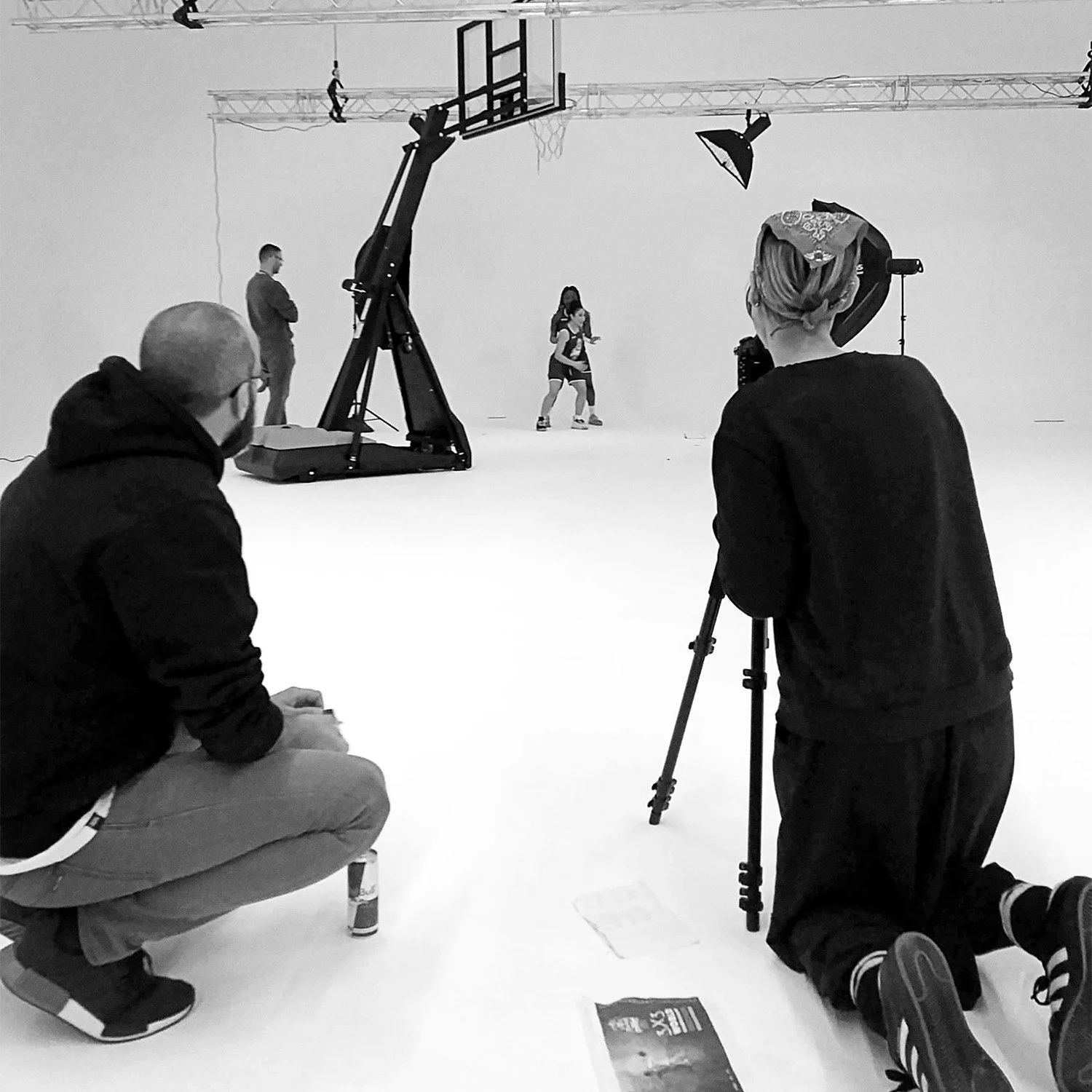
The hours you see me are not the job. A shoot involves the conversation that shapes it, the planning and recce, preparing and checking kit, travelling to the location and setting up, the shoot itself, packing down and travelling back, then ingesting, backing up, culling, processing and grading before a single image reaches you. A four-hour shoot is a full working day. A full day's shoot is usually two or three by the time the images are delivered.
That is why I quote per commission rather than by the hour or half day and why a fee does not halve when the shooting time does. The preparation, travel and post-production barely move. Where photographers do offer a shorter option, the industry convention is around two-thirds of a full fee rather than half, for exactly this reason.
There is a second reason, which is about value rather than time. Two photographers can produce the same frame in five minutes and in two hours; charging by the hour pays more for the slower one. What you are commissioning is experience, judgement and the right to use the result, not a quantity of someone's afternoon.
If your budget is fixed, say the number early. It is far more useful to shape a brief around a real figure than to discover afterwards that the scope never fitted it.
How much time do you actually need?
More than people expect, and less than they fear.
A single location with a small number of subjects and a tight shot list can be done properly in a short shoot. Multiple locations, changes of kit or clothing, a mix of action and portraiture, or anything weather-dependent needs a full day, not because the shooting takes that long, but because the moving between things does.
The honest test: write your must-have shot list, then ask which three shots you would sacrifice if the light went. If the answer is "none of them", you need more time than you have budgeted.
What is included as standard, and what is genuinely extra?
Included in every commission: a pre-shoot conversation, planning against your brief, the shoot itself, and delivery of the images we agreed.
Scoped and priced per project: the work either side of the shoot. At the front end that is production planning, a recce, location scouting, permit liaison, and the calls it takes to bring several stakeholders to the same brief. At the back end it is volume: culling, selection, raw processing and colour grading happen on every job, but the scale of them varies enormously. A single-location brand shoot and a multi-day assignment producing thirty thousand frames to be cut down to three thousand are not the same amount of work, and the estimate reflects that.
Chargeable separately: additional shoot time, extensive Photoshop retouching or compositing, which I outsource to a specialist retoucher and quote before work begins, further selects requested after delivery, model or talent fees, location and permit costs, travel beyond the agreed location, and expanded usage.
Outside a photographer's scope: artworking and print production. Those belong with your designer or printer. None of that should ever arrive as a surprise on an invoice. If it is likely, it belongs in the estimate.
How to avoid generic imagery
The most common disappointment is not technical. It is that the pictures came back looking like everybody else's. That usually happens for one of three reasons.
The brief was built around trends rather than intention.
Reference images are useful for tone; they are limiting when they become a shot list. If the plan is to recreate someone else's campaign, the best possible outcome is a second-best version of it.
The emotional tone was never defined.
"Modern and clean" tells me nothing. "It should feel like the first ten minutes of a class, before anyone has warmed up" tells me everything.
There was no room for anything real to happen.
When a shoot is over-styled and over-directed end to end, the work loses its pulse. Some of the strongest frames I have taken came from the ten minutes after the planned setup was finished. The best photography does not impose a story, it reveals the one that is already there.
For sport, movement and wellbeing brands especially, there is a particular truth worth holding onto: your audience is looking for permission, not perfection. Imagery that is too polished tells people this is not for them.
Questions worth asking any photographer before you book
What usage is included in your quote, and what would take it beyond that?
Who owns the copyright, and what licence am I getting?
What is your turnaround, and can you meet my launch date?
How many final images should I expect, and how are they selected?
What is included in post-production, and what is chargeable?
If retouching is needed, who does it and how is it priced?
What happens if the weather or a participant falls through?
Are you insured, and do you hold public liability cover?
Are you a member of a professional body, and do you work to its standard terms?
Any photographer worth commissioning will answer all of those without hesitating.
Let's start with the brief
From national campaigns and agency commissions to brand refreshes and smaller story-driven projects, the work that lands is the work that started with a clear sense of purpose.
If you are shaping a commission and want a thoughtful, collaborative approach to sport, movement, wellbeing or lifestyle imagery, get in touch and tell me what the images need to do. I am based in London and work across the UK.